DIEP Flap Recovery Timeline: A Detailed Week-by-Week Guide
Dr Brian Kelley outlines the realistic, staged recovery timeline for DIEP flap breast reconstruction. It details expectations from the initial hospital stay and flap monitoring through early home recovery, highlighting drain care, activity restrictions, and potential warning signs. The text explains the gradual return to function, work, exercise, and intimacy over subsequent months. Emphasizing that recovery involves physical, psychological, and social dimensions, the guide addresses long-term considerations, physical therapy, and the timing of refinement procedures to assist patients in preparing for a multidimensional, year-long healing process.

Introduction
Patients researching DIEP flap reconstruction encounter a recurring problem: most online descriptions of recovery either skim over the specifics or present a single optimistic timeline that does not match what the actual weeks and months feel like. This post is the version of recovery I wish more patients had access to before their operations — a detailed, honest, week-by-week walkthrough of what to expect, addressing the abdominal and breast sites separately, and covering the topics patients ask about in clinic but rarely see written down: drain care, activity restrictions, warning signs, physical therapy, return to work, return to sports, and return to intimacy.
I practice as a dual board-certified plastic and reconstructive surgeon in Austin, Texas, as an Affiliate Faculty Professor at Dell Medical School, and as a partner at the Seton Ascension Institute for Reconstructive Plastic and Hand Surgery. My published work on the timing of rehabilitation after surgical reconstruction in other fields1 informs how I think about the sequencing of recovery and the role of structured rehabilitation. The honest framing throughout this post is that DIEP recovery is not a sprint, and the patients who do best are the ones who plan for a marathon.
Specific timelines below are typical ranges. Individual recovery varies with unilateral versus bilateral surgery, immediate versus delayed timing, prior radiation, smoking history, and comorbidities. Your surgeon's specific instructions take precedence over any general guidance on this page.
The Honest Framing: Recovery Is Longer Than One Operation
One of the most consistent gaps in how breast reconstruction is described is that recovery is presented as the recovery from a single operation. For most DIEP patients, the actual recovery period extends across multiple staged procedures over a year or longer — the index DIEP reconstruction, occasional revision surgery for contour or symmetry, fat grafting sessions for refinement, and second-stage nipple-areolar reconstruction if pursued. The patient-reported outcomes literature on breast reconstruction, including the BREAST-Q and PROMIS-based studies that have become the standard for measuring patient experience, consistently shows that satisfaction and quality of life continue to evolve for at least 12 to 18 months after the initial reconstruction.2
This matters for planning. A patient who frames recovery as "six to eight weeks" sets expectations for a single timeline that doesn't reflect the full course. A patient who frames it as "the next year of staged care" plans more accurately, schedules their work and life around the realistic timeline, and is generally more satisfied with the experience.
Days 1–4: The Hospital Stay and Flap Monitoring
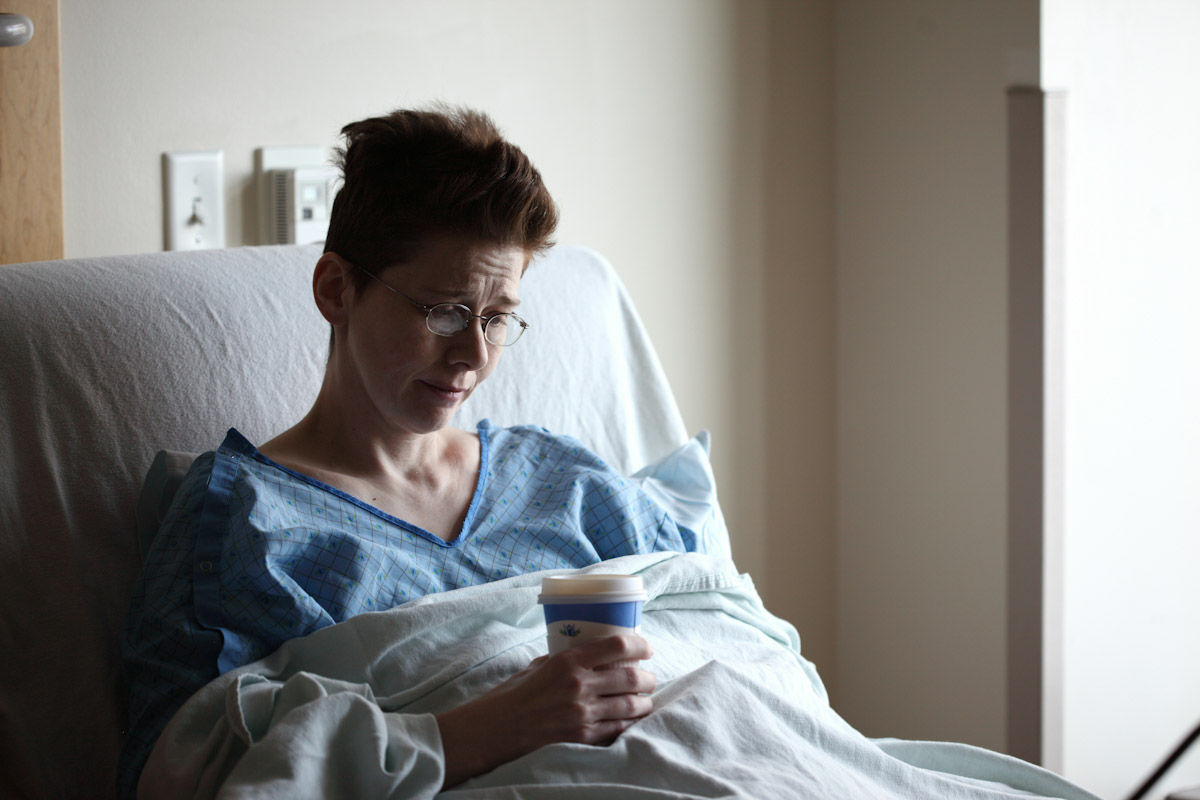
Nationally, most DIEP patients spend three to four nights in the hospital. The first 24 to 48 hours are dominated by intensive flap monitoring — clinical examination of flap color, temperature, and capillary refill at frequent intervals, sometimes supplemented by implantable Doppler probes or tissue oximetry. The reason for this intensity is biological: vascular compromise of a free flap is most likely to occur in the first 48 hours, and salvage rates are dramatically higher when problems are caught early.
Pain management during this period uses a multimodal approach. Modern pain protocols emphasize regional anesthesia (transversus abdominis plane blocks placed at the time of surgery, sometimes supplemented by epidural or paravertebral blocks), scheduled non-opioid analgesics, and opioid use limited to what genuinely adds value. My systematic review on postoperative pain management in hand surgery,3 while focused on a different anatomic region, supports the same principle that applies in breast reconstruction: multimodal pain control reduces opioid exposure while maintaining adequate comfort.
My other research on opiate and pain modulation in plastic surgery and patients undergoing body contouring has also helped to shape my care in this delicate time.
You will be mobilized early — out of bed, sitting in a chair, walking short distances — typically starting the day after surgery. Early mobilization reduces deep vein thrombosis risk and accelerates return of bowel function. You will not be sitting upright fully; the position that protects the abdominal closure is a slightly flexed posture, often called the "beach chair" position, with the head and knees elevated.
Drains are placed at the chest and at the abdominal donor site. You will leave the hospital with two to four drains in place, depending on whether the surgery was unilateral or bilateral. Drain education before discharge is essential: how to strip the tubing, how to empty and measure output, when to report concerns, and how to document the daily volume.
Early on, we may provide you with a walker so that you can walk more comfortably.
Weeks 1–2: Early Recovery at Home
You leave the hospital with detailed instructions on activity, drains, wound care, and warning signs. The first two weeks at home are about protecting the surgical sites while gradually increasing activity within strict limits.
Activity restrictions. Lifting is limited to roughly five to ten pounds (typically the weight of a gallon of milk). No pushing, pulling, or reaching overhead with substantial force. Sleeping is best done in a slightly upright position, often with pillows or a recliner, for the first one to two weeks to protect the abdominal closure and reduce swelling. Driving is not permitted while you are still taking opioid medication and not until you can perform a controlled emergency stop comfortably — typically two to three weeks for most patients.
Mobilization and Clot Risk. After surgery of this scale, patients are at higher risk for blood clots. This is worsened in the elderly, sick, or with a cancer diagnosis. I take blood clot, including deep venous thrombosis or pulmonary embolism (DVT / PE), very seriously. We will want you to walk and may even prescribe subtherapeutic blood thinners for you to decrease this risk.
Drain care. Drains are stripped two to four times daily and emptied at least twice daily. Output is measured and recorded. Drains are typically removed when the daily output falls below approximately 30 milliliters per 24 hours for two consecutive days, though specific criteria vary. Most patients have at least one drain removed during the first follow-up visit at week 1 to 2, and most drains are out by week 3 to 4.
Wound care. Showering is permitted at a specified interval after surgery (typically 48 to 72 hours in my practice, but depending on dressings and surgeon preference). The surgical sites should be gently patted dry. Bathing — submerging the surgical sites in water — is not permitted until well after drains are removed and incisions are fully sealed.
Warning signs that warrant immediate contact:
- Sudden change in flap color (pale, blue, dusky, or mottled)
- Sudden increase in pain at the flap site
- Fever above 101.4°F or chills
- Expanding redness or warmth around any incision
- Foul-smelling or significantly increased drainage from any drain
- Drain output that suddenly increases by more than 50% over baseline
- Shortness of breath, chest pain, or calf pain or swelling (concern for pulmonary embolism or DVT)
These warning signs should prompt a call to the surgical team or an emergency department visit. Do not wait for the next scheduled appointment.
Weeks 3–6: Gradual Return to Function
This is when patients begin to feel meaningfully better and want to do more. The key is to expand activity in a structured way rather than abruptly.
Activity progression. Lifting limits expand gradually, typically to ten to fifteen pounds by week 4 and to twenty pounds by week 6 in uncomplicated recoveries. Pushing and pulling tolerances increase similarly. Most patients can resume driving once off opioids and confidently able to perform a controlled stop. Light walking outdoors, household tasks, and gradual return to non-physical work are reasonable in this window for most patients.
Return to work. Desk-based or sedentary work is often manageable around weeks 3 to 4. Physically demanding work — heavy lifting, prolonged standing, healthcare work, manufacturing, trades — generally requires six to eight weeks minimum and sometimes longer. The decision is individualized based on the specific demands of your work and how recovery is progressing. Some employers accommodate gradual return with reduced hours or modified duties for the first weeks back.
Posture and the abdominal closure. By weeks 4 to 6, most patients can stand fully upright without straining the abdominal closure. Patients who have a tight abdominal closure or who had a substantial tissue harvest may take longer. The transition from a slightly flexed posture to full upright is gradual and should not be forced.
Months 2–3: Reconditioning and Refinement
By two to three months, the acute recovery phase is essentially complete. The focus shifts to physical reconditioning and the early conversations about refinement procedures.
Physical therapy and core strengthening. Formal physical therapy or guided core reconditioning is appropriate to begin around weeks 6 to 8 in most patients. The abdominal wall — even after DIEP, which preserves the rectus muscle — has been substantially disrupted, and core endurance is meaningfully reduced compared to pre-operative baseline. Structured reconditioning addresses this. Patients who skip this phase often plateau at a lower functional baseline than they could have achieved.
The progression typically starts with gentle activation exercises (deep abdominal bracing, controlled pelvic tilts), advances to functional core training (modified planks, controlled rotation, posture-stable lifting), and eventually returns to full pre-operative core function over months. Patients who were active before surgery — runners, lifters, yoga practitioners — generally return to their prior activity level over three to six months with appropriate progression. Patients who were less active before surgery often reach a higher functional baseline than they started with, because the surgical recovery itself motivates a structured return to fitness.
Return to sports and impact activity. Low-impact activity (walking, stationary cycling) typically returns earliest, often by weeks 6 to 8. Moderate-impact activity (jogging, hiking, gentle yoga) generally returns by months 2 to 3 with surgeon clearance. High-impact and core-demanding activity (running, weight training, sports with rotational forces) returns by months 3 to 6 depending on individual progress. Activities that involve substantial chest pressure (heavy bench press, some grappling sports) may take longer or require adaptation.
Refinement conversations. This is when discussions about second-stage refinement procedures — fat grafting for contour, scar revision, nipple-areolar reconstruction — typically begin. The reconstructed breast and the abdominal site are still maturing, so most refinement procedures are scheduled several months after the index reconstruction. Patients should not feel rushed into refinement; the timing is matched to how the tissue is settling.
Return to Intimacy
This deserves its own section because it is atopic patients often ask about in clinic but rarely see addressed in patient education materials.
The honest framing is that physical readiness for intimacy and emotional readiness for intimacy follow different timelines, and both matter. Physically, most patients are cleared for sexual activity at around four to six weeks after surgery — the timeline that protects the surgical sites from undue tension or pressure. Position adjustments to avoid direct pressure on the reconstructed breast or the abdominal closure are appropriate during the early weeks of resumption.
Emotionally and psychologically, the picture is more variable. The reconstructed breast typically has markedly reduced sensation, the nipple-areolar complex (when preserved) often has minimal sensation, and the body itself feels different. The 2024 systematic review I helped lead on breast reinnervation,4 examining the published literature on breast sensibility after mastectomy and reconstruction, found that the field has not yet established normative measurements for breast sensation — meaning that what patients report about their experience is more informative than what objective testing reveals at this point in the science.
For many patients, the adjustment to intimacy after reconstruction is gradual and benefits from honest conversation with their partner, sometimes with the support of a counselor or therapist who works with cancer survivors. Sexual dysfunction after breast cancer treatment is common and is increasingly addressed by oncology survivorship clinics as part of long-term care. Patients who experience persistent difficulty are encouraged to raise it with their surgeon, oncologist, or survivorship team — it is a legitimate and treatable concern, not something to manage alone.
Months 6–12: Approaching the Final Result
By six months, most patients are essentially through the acute recovery phase. Activities have returned, scars are maturing, and the reconstructed breast and abdominal site are approaching their final form. Conversations about additional refinement — second-stage nipple-areolar reconstruction, additional fat grafting, contralateral symmetry adjustments — typically peak during this window if they have not already begun.
Patient-reported outcomes measures applied to breast reconstruction patients consistently show that satisfaction with the reconstruction continues to improve well past the six-month mark and frequently reaches a plateau between 12 and 18 months. The BREAST-Q, the most widely used validated patient-reported outcome instrument for breast reconstruction, captures dimensions including satisfaction with breasts, psychosocial well-being, sexual well-being, and physical well-being separately — and the trajectories of these dimensions are not always parallel. Some patients reach physical recovery quickly while psychosocial adjustment continues; others adjust psychologically before physical recovery is complete.5
The point is not to optimize against a benchmark. The point is that recovery from breast reconstruction is a multidimensional process, and patients who allow themselves the time to recover across all dimensions — physical, psychological, and social — generally end the year in a different and better place than they began it.
Risks and What to Watch For Long-Term
Specific complications worth understanding beyond the acute period:
Fat necrosis. Firm, sometimes painful nodules within the reconstructed breast can develop weeks to months after surgery as small areas of fat that did not survive. Most resolve over time; occasionally they require excision or biopsy to distinguish from other lesions.
Abdominal bulge or hernia. Even with DIEP and its muscle-sparing technique, some patients develop visible bulge or a true hernia at the donor site. The rate is meaningfully lower than after TRAM, but it is not zero. Persistent abdominal bulge that develops months after surgery warrants evaluation.
Late seroma. Fluid collections at either the flap site or the donor site can develop weeks to months after surgery and may require aspiration or further drain placement.
Scar issues. Both the chest and abdominal scars can become hypertrophic or hyperpigmented, particularly in patients with darker skin or genetic predisposition to keloid formation. Scar management with silicone sheeting, massage, and sometimes corticosteroid injection can be initiated weeks after surgery.
Sensation changes. Reduced sensation in the reconstructed breast and at the abdominal donor site is the typical outcome. For most patients, sensation at the abdominal donor site improves substantially over a year; sensation in the reconstructed breast does not generally return to baseline regardless of reinnervation efforts.
Related Topics
- DIEP flap breast reconstruction
- and my DIEP Flap Blog Post
- DIEP vs. TRAM flap: why muscle-sparing matters
- Implant-based breast reconstruction
- Breast sensation after mastectomy
- Autologous fat grafting in reconstructive surgery
- Sex and Intimacy After Breast Reconstruction
Written by Brian P. Kelley, MD — Dual Board-Certified Plastic & Hand Surgeon
Affiliate Faculty Professor, Dell Medical School at The University of Texas at Austin
Partner, Seton Ascension Institute for Reconstructive Plastic and Hand Surgery
Medically reviewed: May 14, 2026 · Last updated: May 14, 2026
Educational content. Not a substitute for individualized medical evaluation.
Frequently Asked Questions
Plan for at least six to eight weeks off work for most occupations, longer for physically demanding work. Desk-based work can sometimes resume around weeks 3 to 4. The decision is individualized based on your specific job and how recovery is progressing.
Most patients can drive two to three weeks after surgery, once they are off opioid medication and can perform a controlled emergency stop comfortably. Driving while taking opioids or while still in significant pain is not safe.
Light walking returns first, often within days. Low-impact exercise (stationary cycling, gentle yoga, swimming once incisions are sealed) returns around weeks 6 to 8. Higher-impact exercise (running, weight training, sports) returns at three to six months depending on individual progress and surgeon clearance.
Most patients are cleared for sexual activity at four to six weeks. The timing protects the surgical sites from undue tension or pressure. Position adjustments to avoid direct pressure on the reconstructed breast or abdominal closure are appropriate during early resumption. Emotional readiness is its own timeline and often takes longer than physical readiness.
Drains typically stay in for two to four weeks, removed individually as output falls below a threshold (usually around 30 milliliters per 24 hours for two consecutive days). Some patients have all drains out by week 3; others retain one drain longer.
The reconstructed breast continues to settle, soften, and refine for 6 to 12 months after surgery. The final aesthetic result is generally apparent by one year, though many patients undergo additional refinement procedures (fat grafting, nipple-areolar reconstruction) during this window that contribute to the final appearance.
The abdomen continues to soften and settle over months. The lower abdominal scar typically fades over a year and is hidden by underwear in most patients. Abdominal sensation in the area between the scar and the umbilicus is usually altered, often permanently. Core strength returns to functional baseline with structured reconditioning, though it may take three to six months.
Yes, most patients benefit from formal physical therapy or guided core reconditioning starting around weeks 6 to 8. The principle that rehabilitation timing affects functional outcome is well established in surgical recovery literature, including in my published work on hand therapy after tendon repair. Patients who engage with rehabilitation generally achieve better long-term function than those who do not.
Yes, but we may restrict it in the first few days after surgery. Coffee, tea, or chocolate may contain caffeine and caffeine can cause mild vasoconstriction. Even decaffeinated drinks still have small amounts of caffeine. After microvascular surgery, such as a DIEP flap, surgeons worry that vasoconstriction can compromise the blood supply to the transferred tissues. This is likely overkill given the lack of data showing a real effect in this surgical setting, but many surgeons still have some restriction out of caution. However, when this causes headaches or further distress, we can likely allow modest caffeine intake without worry.
Medical References
1. Johnson SP, Kelley BP, Waljee JF, Chung KC. Effect of Time to Hand Therapy following Zone II Flexor Tendon Repair. Plastic and Reconstructive Surgery — Global Open. 2020;8(12):e3278. PMID: 33425592.
2. Pusic AL, Klassen AF, Scott AM, et al. Development of a new patient-reported outcome measure for breast surgery: the BREAST-Q. Plastic and Reconstructive Surgery. 2009;124(2):345–353. The BREAST-Q is the most widely validated patient-reported outcome instrument for breast reconstruction.
3. Kelley BP, Shauver MJ, Chung KC. Management of Acute Postoperative Pain in Hand Surgery: A Systematic Review. Journal of Hand Surgery — American. 2015;40:1610–1619. PMID: 26213198.
4. Schafer HA, Leathers KO, Mumford KC, Ilangovan S, Vetter IL, Henry SL, Kelley BP, Torres-Guzman RA, Egeland BM. "Toward Breast Reinnervation — What is our Endpoint": A Systematic Review of Normal Breast Sensibility. Journal of Plastic, Reconstructive & Aesthetic Surgery. 2024;91:383–398. PMID: 38461623.
5. Kelley BP, Franzblau LE, Chung KC, Carlozzi N, Waljee JF. Hand Function and Appearance following Reconstruction for Congenital Hand Differences: A Qualitative Analysis of Children and Parents. Plastic and Reconstructive Surgery. 2016;138(1):73e–81e. PMID: 27348688. Cited as an example of qualitative patient-reported outcomes methodology, applied here to reconstructive surgery generally.
6. Kelley BP, Ahmed R, Kidwell KM, Kozlow JH, Chung KC, Momoh AO. A systematic review of morbidity associated with autologous breast reconstruction before and after exposure to radiotherapy. Annals of Surgical Oncology. 2014;21(5):1732–1738. PMID: 24473643.
7. American Society of Plastic Surgeons — patient resources on breast reconstruction recovery: https://www.plasticsurgery.org/news/blog/recovery-after-diep-flap-breast-reconstruction.



Want to learn more?
Book a consultation