Revising a Prior Breast Reconstruction: What's Possible?
Many patients who had a breast reconstruction in the past are unhappy with the result or developed a complication and assume they are stuck with it. Usually they are not. Dr. Brian Kelley, a reconstructive microsurgeon in Austin, explains the realistic options for revising a prior reconstruction — cosmetic refinement, converting implants to your own tissue, improving or salvaging a prior flap with other donor sites, or converting to aesthetic flat closure — and what the outcomes data show.
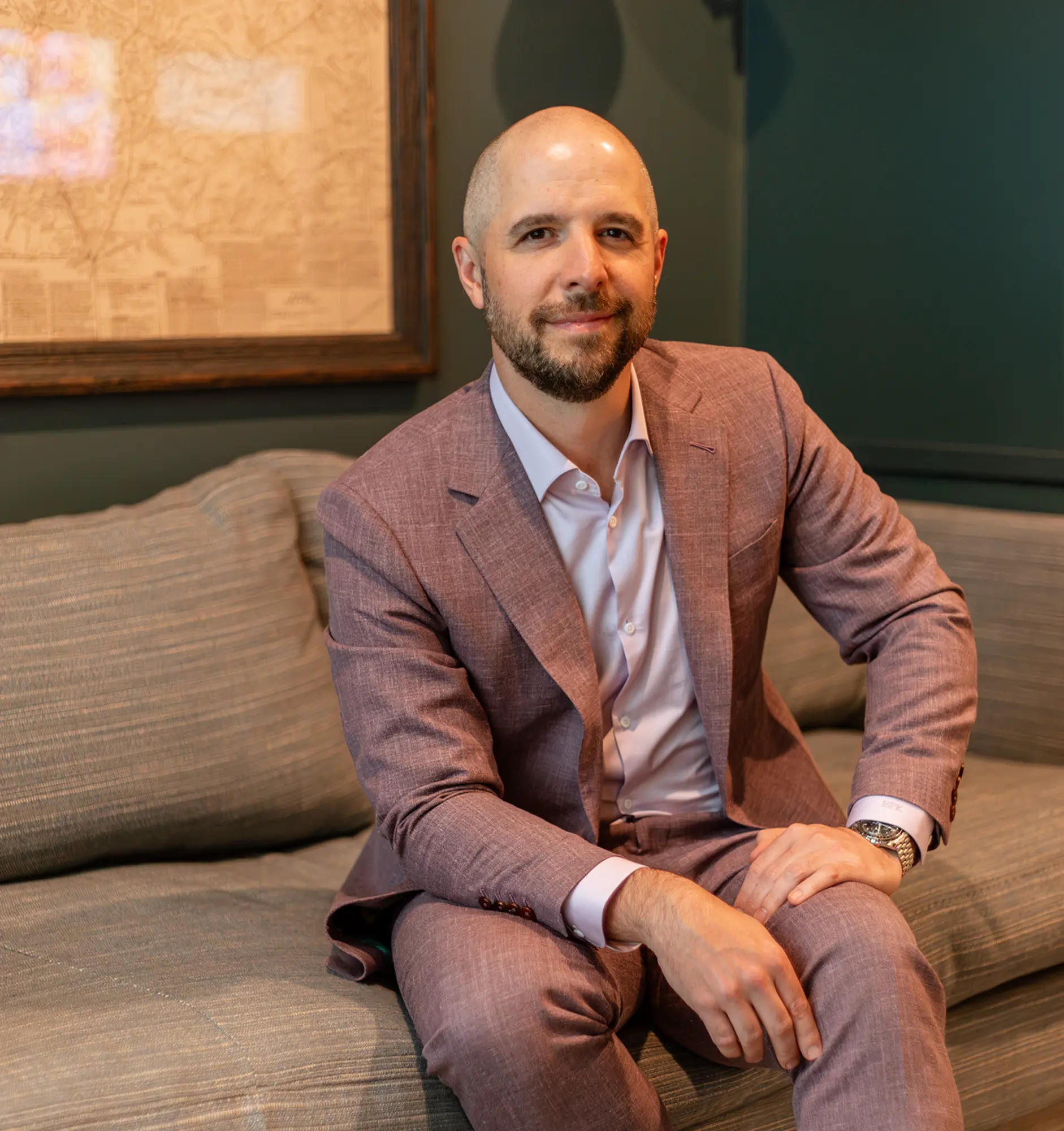

Written by Brian P. Kelley, MD — Dual Board-Certified Plastic & Hand Surgeon
Affiliate Faculty, Dell Medical School at The University of Texas at Austin
Seton Ascension Institute for Reconstructive Plastic and Hand Surgery — Austin, Texas
Medically reviewed: May 9, 2026 · Last updated: May 9, 2026
Educational content. Not a substitute for individualized medical evaluation.
Introduction
Some of the most meaningful consultations I have are with patients who had a breast reconstruction in the past or somewhere else, are unhappy with the result or have developed a complication, and do not know whether anything can be done. Often they have been living with the problem for years, assuming the result they have is the result they are stuck with. In most cases, that assumption is wrong. Revision of a prior breast reconstruction — including reconstruction performed by another surgeon, at another institution, sometimes long ago — is a substantial and well-established part of reconstructive practice, and the options are broader than many patients realize.
I am a double board-certified plastic reconstructive and hand surgeon in Austin, Texas, an Affiliate Faculty professor at Dell Medical School at The University of Texas at Austin, and a partner at the Seton Ascension Institute for Reconstructive Plastic and Hand Surgery. I take referrals from across Central Texas, including patients seeking revision or salvage of reconstructions performed elsewhere. This article explains the realistic options for revising a prior breast reconstruction — cosmetic refinement, converting implants to your own tissue, improving or salvaging a prior flap, and converting to aesthetic flat closure — along with what the outcomes literature shows and what to consider.
First: A Fresh Evaluation, Not a Judgment of the Prior Surgeon
Before describing the options, an important framing point. Seeking revision is not a criticism of the original surgeon, and a good revision consultation does not begin by second-guessing prior decisions. Reconstruction is difficult, complications occur even in excellent hands, aesthetic results evolve over time, implants age and develop problems, radiation changes tissue, and a patient's own preferences and body change over the years. A patient who is unhappy years later is not necessarily the result of a poorly performed operation — and the question that matters is not what went wrong before, but what is possible now.
A revision consultation starts with a complete fresh evaluation: a detailed history of the original cancer treatment and reconstruction, review of operative records and imaging when available, a physical examination of the current reconstruction and the available donor sites, and a careful conversation about what specifically the patient is unhappy with and what she hopes to improve. From that, a realistic menu of options emerges.
Option 1: Aesthetic Revision Without Changing the Type of Reconstruction
Many patients are fundamentally satisfied with the type of reconstruction they have but are bothered by specific aesthetic issues. For these patients, revision does not mean starting over — it means refining what is already there.
Cosmetic revision procedures include fat grafting to correct contour irregularities, rippling, or thin areas of soft tissue coverage; scar revision; correction of asymmetry between the reconstructed and natural or contralateral breast; nipple-areolar reconstruction or revision; capsular procedures for an implant that has become firm or malpositioned; and implant exchange for a different size or type. A contralateral symmetry procedure — a lift, reduction, or augmentation on the other side — is often part of achieving balance.
These are generally lower-risk procedures than a complete change of reconstruction type, and for many patients they accomplish exactly what is needed. The key is an honest assessment of whether refinement of the existing reconstruction can reach the patient's goals, or whether a more fundamental change is warranted.
Option 2: Converting Implant-Based Reconstruction to Your Own Tissue
This is one of the more common and more transformative revisions I perform: converting an implant-based reconstruction to autologous (flap) reconstruction using the patient's own tissue.
The patients who seek this conversion typically fall into a few groups. Some have developed capsular contracture — painful, distorting hardening of the scar tissue around the implant — sometimes repeatedly despite prior revision. Some have had radiation, either before or after their implant reconstruction, and the irradiated tissue around the implant has become firm, painful, or aesthetically poor. Some simply do not like the feel or appearance of an implant reconstruction and want the more natural feel of their own tissue. And some have had an implant complication — rupture, malposition, infection, or thinning of the overlying tissue — that makes continuing with an implant unappealing.
The conversion involves removing the implant (and usually the capsule), then reconstructing the breast with a flap of the patient's own skin and fat, most commonly the DIEP flap from the lower abdomen, with its blood supply reconnected microsurgically in the chest.
The rationale for this conversion is well supported by the broader reconstruction literature. Implant reconstruction in the setting of radiation carries substantial complication rates — my co-authored systematic review in Annals of Surgical Oncology found reconstruction failure rates approaching 20% in implant reconstruction with pre- or post-reconstruction radiotherapy, while the parallel review of autologous reconstruction found a more stable complication profile across the radiation timeline.1,2 Beyond complications, the patient-reported outcomes literature consistently favors autologous reconstruction for long-term satisfaction: in the large, prospective, multicenter Mastectomy Reconstruction Outcomes Consortium study, patients with autologous reconstruction reported greater satisfaction with their breasts and greater psychosocial and sexual well-being at two years than implant patients, with the difference growing over time as implant satisfaction declined.3 For a patient unhappy with an implant reconstruction, conversion to her own tissue is often the change that addresses both the complication and the long-term satisfaction.
Option 3: Improving or Salvaging a Prior Autologous Reconstruction
Not every revision involves an implant. Some patients have had a prior flap reconstruction that did not turn out as hoped — a flap with poor contour or volume, partial flap loss or fat necrosis, asymmetry, donor-site problems, or simply an aesthetic result that falls short. These prior autologous reconstructions can often be improved or, in more involved cases, salvaged with additional tissue.
The options depend on what tissue was used before and what remains available. Improvement of an existing flap can include fat grafting to correct contour and add volume, revision of fat necrosis, scar and contour revision, and symmetry procedures. When more volume or coverage is needed than the existing flap provides, or when a prior flap has substantially failed, a new flap from a different donor site can be brought in — for example, a thigh-based flap (PAP or TUG) or a gluteal-based flap (GAP) when the abdomen has already been used or is unavailable. These secondary and tertiary autologous reconstructions are technically demanding and are exactly the kind of complex microsurgical work that benefits from a surgeon and team experienced in the full range of donor sites.
The honest framing here is that salvage and revision of a prior flap is more complex than primary reconstruction, because the tissue planes, blood supply, and available donor sites have all been altered by the previous surgery. But for the right patient, a meaningfully better result is achievable.
Option 4: Converting to Aesthetic Flat Closure
Not every patient who is unhappy with a reconstruction wants another reconstruction. Some, after living with an implant or flap that has caused complications, discomfort, or dissatisfaction, decide they would prefer to have the reconstruction removed and the chest contoured into a smooth, flat result — an aesthetic flat closure.
This is a legitimate and increasingly recognized choice, and it is more common than many patients realize. In a large survey of patients who chose to "go flat," 15% had initially undergone breast reconstruction that was later removed, and the reason for removal in roughly 70% of those cases was a problem with the implant.4 For an implant reconstruction, conversion to flat closure involves removing the implant and capsule and contouring the soft tissue into a flat, comfortable chest wall. For a flap reconstruction, it involves reducing or removing the flap tissue and contouring the result.
Choosing to convert a reconstruction to flat closure is not an admission of failure — it is a valid choice that fits some patients' lives and preferences. A surgeon's role is to help the patient reach the result she actually wants, whether that is a better reconstruction or no reconstruction at all. I discuss this option in more detail in a dedicated article on aesthetic flat closure.
What the Outcomes Literature Shows
Revision and secondary reconstruction is a less heavily studied area than primary reconstruction, but the relevant evidence is informative and points in consistent directions.
The patient-reported outcomes data strongly support autologous reconstruction for long-term satisfaction, which is why conversion from implant to flap so often improves a patient's experience. The Mastectomy Reconstruction Outcomes Consortium and multiple BREAST-Q–based meta-analyses consistently find higher long-term satisfaction with the breast, and better psychosocial and sexual well-being, among autologous patients compared to implant patients.3 The complication data similarly favor autologous reconstruction in the radiation setting, where implant reconstruction fails in roughly one in five patients.1,2
For cosmetic revision of an existing reconstruction, the goal is incremental improvement, and well-selected refinement procedures (fat grafting, scar revision, symmetry procedures) reliably improve specific aesthetic concerns. For salvage of a failed or suboptimal flap with a new donor site, the evidence base is smaller and consists largely of case series from experienced centers, but it supports the feasibility and value of these complex revisions in appropriate patients.
The honest, unifying message from the literature is that revision is worthwhile for the right patient, that conversion to autologous tissue tends to improve long-term satisfaction, and that the quality of the evaluation and the experience of the surgical team matter a great deal for these complex secondary procedures.
Recovery and What to Expect
Recovery depends entirely on which revision is performed. Cosmetic refinement procedures (fat grafting, scar revision) are typically outpatient with short recoveries of a couple of weeks. Implant exchange or capsular procedures are generally short-recovery operations. Conversion to autologous reconstruction, or salvage with a new flap, is a major microsurgical operation with a recovery comparable to primary flap reconstruction — a hospital stay of several days, drains for weeks, and restricted activity for six to eight weeks, with continued refinement possible over the following months. Conversion to flat closure has a recovery that reflects the removal and contouring involved, generally a few weeks. Revisions or stages can be necessary for all procedures to achieve optimal results - even aesthetic flat closure!
As with any reconstruction, the full result of a revision often unfolds over months, and some revisions are themselves staged, with refinement procedures following the main operation. A realistic timeline is part of the planning conversation.
Risks
Revision surgery carries the general risks of any breast surgery — bleeding, infection, hematoma, seroma, wound healing problems, and an aesthetic result that may not fully meet expectations. Revision also carries some specific considerations: operating in previously surgical, sometimes irradiated, tissue is more demanding and can carry higher risk than operating in untouched tissue; conversion to autologous reconstruction adds the risks of microsurgery, including partial or total flap loss and donor-site complications; and salvage of a failed flap with a new donor site is among the more complex reconstructive procedures, with risk that reflects that complexity. Honest counseling about the realistic risks and the realistic likelihood of achieving the patient's goals is essential before any revision.
Related Topics
Frequently Asked Questions
Yes. Revising a breast reconstruction performed by another surgeon or at another institution, sometimes years later, is a well-established part of reconstructive practice. The options include cosmetic refinement of the existing reconstruction, converting an implant reconstruction to your own tissue, improving or salvaging a prior flap, or converting to aesthetic flat closure. A fresh evaluation determines which options fit your situation.
Yes, and it is one of the more common revisions performed. Converting implant-based reconstruction to autologous (flap) reconstruction involves removing the implant and capsule and rebuilding the breast with your own skin and fat, most often from the lower abdomen (a DIEP flap). This is frequently sought by patients with capsular contracture, radiation-related problems, implant complications, or simply a preference for the more natural feel of their own tissue. The patient-reported outcomes literature favors autologous reconstruction for long-term satisfaction.
Radiation commonly causes the tissue around an implant to become firm, painful, and aesthetically poor, and implant reconstruction in irradiated tissue has high complication rates — failure approaching one in five in pooled data. For many of these patients, converting to autologous reconstruction with their own tissue is the most effective solution, because living tissue tolerates the radiated environment far better than an implant does. A consultation can determine whether you are a candidate.
Often, yes. A prior flap reconstruction with poor contour, volume loss, fat necrosis, or asymmetry can frequently be improved with refinement procedures such as fat grafting and scar revision. When more substantial change is needed, or a prior flap has largely failed, a new flap from a different donor site (such as the thigh or buttock) can be used. These salvage procedures are complex and benefit from an experienced microsurgical team, but a better result is achievable for the right patient.
Yes. Converting a reconstruction to an aesthetic flat closure — removing the implant or flap and contouring the chest into a smooth, flat result — is a legitimate and recognized choice. It is most common with implant reconstructions that have developed problems such as capsular contracture or discomfort. Choosing this is not a failure; it is a valid option for patients who would prefer not to have a reconstruction.
There is generally no time limit. Patients seek revision months or many years after their original reconstruction, and revision remains possible long afterward. Implants age and develop problems over time, aesthetic results and preferences evolve, and the option to revise or convert does not expire. The right timing depends on your specific situation and goals.
Revision and conversion of breast reconstruction, particularly conversion to autologous tissue or salvage with a new flap, is complex microsurgical work best done by a surgeon and team experienced in the full range of reconstructive options. Academic and specialized centers concentrate this expertise. As a reconstructive microsurgeon in Austin, I see patients from across Central Texas for revision and salvage of reconstructions performed elsewhere, and referrals from other physicians are welcome.
1. Momoh AO, Ahmed R, Kelley BP, Aliu O, Kidwell KM, Kozlow JH, Chung KC. A systematic review of complications of implant-based breast reconstruction with prereconstruction and postreconstruction radiotherapy. Annals of Surgical Oncology. 2014;21(1):118–124. PMID: 24081801.
2. Kelley BP, Ahmed R, Kidwell KM, Kozlow JH, Chung KC, Momoh AO. A systematic review of morbidity associated with autologous breast reconstruction before and after exposure to radiotherapy: are current practices ideal? Annals of Surgical Oncology. 2014;21(5):1732–1738. PMID: 24473643.
3. Santosa KB, Qi J, Kim HM, Hamill JB, Wilkins EG, Pusic AL. Long-term Patient-Reported Outcomes in Postmastectomy Breast Reconstruction. JAMA Surgery. 2018;153(10):891–899. PMID: 29926096.
4. Baker JL, Dizon DS, Wenziger CM, Streja E, Thompson CK, Lee MK, DiNome ML, Attai DJ. "Going Flat" After Mastectomy: Patient-Reported Outcomes by Online Survey. Annals of Surgical Oncology. 2021;28(5):2493–2505. DOI: 10.1245/s10434-020-09448-9.
5. Bennett KG, Qi J, Kim HM, Hamill JB, Pusic AL, Wilkins EG. Comparison of 2-Year Complication Rates Among Common Techniques for Postmastectomy Breast Reconstruction. JAMA Surgery. 2018;153(10):901–908. PMID: 29926077.
6. Pusic AL, Klassen AF, Scott AM, Klok JA, Cordeiro PG, Cano SJ. Development of a new patient-reported outcome measure for breast surgery: the BREAST-Q. Plastic and Reconstructive Surgery. 2009;124(2):345–353. PMID: 19644246.
7. American Society of Plastic Surgeons — breast reconstruction resources: https://www.plasticsurgery.org/reconstructive-procedures/breast-reconstruction/procedure.
Closing Disclaimer
This article is educational and does not establish a doctor-patient relationship. It does not replace individualized consultation, examination, or review of personal medical history. Patients considering revision of a prior breast reconstruction, including reconstruction performed elsewhere, are encouraged to seek a consultation for an individualized evaluation of their options.



Want to learn more?
Book a consultation