DIEP vs TRAM Flap: Why Muscle-Sparing Matters
Classic operations like TRAM flap helped bring about autologous breast reconstruction, but modern techniques like the DIEP or PAP flap allow for less donor site morbidity. Dr Kelley explores these benefits.

Introduction
Patients researching abdominally based breast reconstruction encounter a confusing terminology — DIEP, TRAM, free TRAM, muscle-sparing TRAM, ms-TRAM — that obscures what is actually a single core question: how much abdominal muscle, if any, will be sacrificed to rebuild the breast. This question matters because the muscle, once taken, cannot be replaced. The choice between procedures determines long-term abdominal strength, hernia risk, and the patient's ability to return to the activities she values.
I practice as a dual board-certified plastic and hand surgeon in Austin, Texas, as an Affiliate Faculty Professor at Dell Medical School at The University of Texas at Austin, and as a partner at the Seton Ascension Institute for Reconstructive Plastic and Hand Surgery. My published work in breast reconstruction includes peer-reviewed systematic reviews on autologous and implant-based reconstruction in the setting of radiation therapy, on tamoxifen and microvascular flap complications, and a senior-authored 2024 systematic review on breast sensibility.
This post is a comparison written for patients who have already encountered both terms and want to understand which procedure is being offered to them and why. The short version: the DIEP flap is the muscle-sparing standard in centers that perform it routinely. The free TRAM and pedicled TRAM remain in use, but the trend across academic plastic surgery over the last twenty years has been toward muscle preservation. The reasons matter.
The Anatomy That Matters
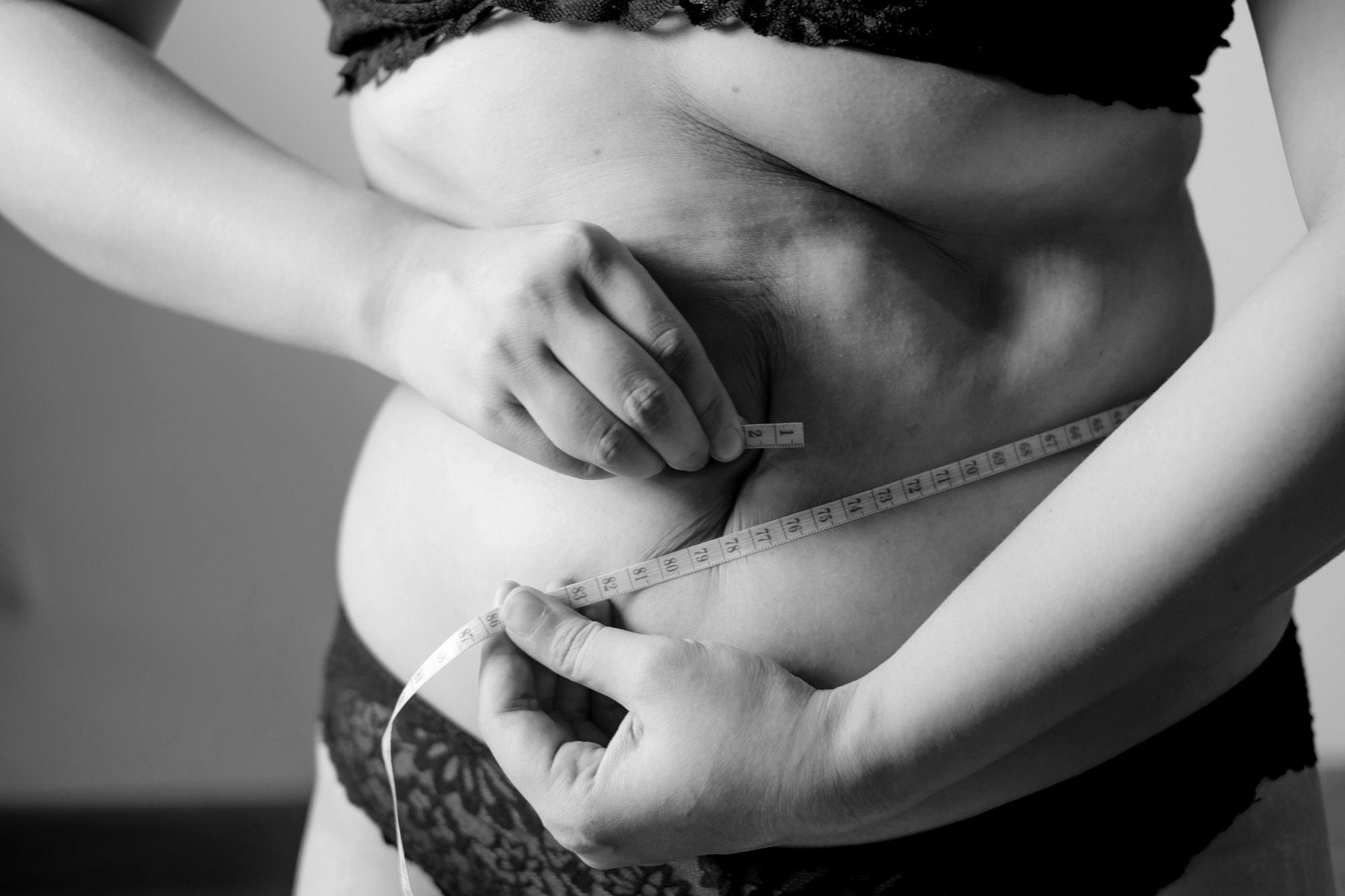
All abdominally based breast reconstruction uses the same donor tissue: an ellipse of skin and fat from the lower abdomen, similar in shape and location to what is removed in a tummy tuck (abdominoplasty). The differences between procedures are about how that tissue is moved to the chest and what blood supply travels with it.
The lower abdominal skin and fat are supplied primarily by the deep inferior epigastric artery and vein, which run on the deep surface of the rectus abdominis muscle. Branches from these vessels — called perforators — pass through the rectus muscle to reach the overlying fat and skin. The number, size, and location of these perforators vary from patient to patient and are mapped before surgery with CT angiography in most modern practices.
Whether the procedure is a DIEP, an ms-TRAM, a free TRAM, or a pedicled TRAM depends entirely on how the surgeon handles the rectus muscle around these perforators.
The Spectrum of Procedures
Pedicled TRAM Flap
The original TRAM (transverse rectus abdominis myocutaneous) flap, described in the 1980s, takes the entire rectus abdominis muscle on one side along with its overlying skin and fat. The muscle remains attached at the top to the superior epigastric vessels, which become the blood supply for the transferred tissue. The flap is then tunneled under the upper abdominal skin to the chest.
This is technically the simplest of the abdominal flaps — no microsurgical anastomosis is required, because the blood supply remains in continuity. It also takes the most muscle. The pedicled TRAM is still performed in some practices, particularly where microsurgical resources are limited, but it carries the highest rate of abdominal donor site morbidity of any abdominal flap.
Free TRAM Flap
The free TRAM flap detaches the muscle and its blood supply from the body, then reconnects the vessels (now the deep inferior epigastric system) to recipient vessels in the chest under the operating microscope. The free TRAM still takes muscle but uses a more reliable blood supply than the pedicled version, generally improving flap survival rates.
Muscle-Sparing Free TRAM (ms-TRAM)
The muscle-sparing free TRAM takes some, but not all, of the rectus abdominis muscle around the perforators. It is a middle-ground operation: less muscle than free TRAM, more than DIEP. It is sometimes selected when the perforator anatomy makes a true DIEP technically risky.
DIEP Flap
The DIEP (deep inferior epigastric perforator) flap takes no muscle. The perforator vessels are carefully dissected through the rectus muscle, which is then closed without any muscle sacrifice. The entire vascular pedicle — artery, vein, and perforators — is preserved, and the muscle is left in place.
This is the most technically demanding of the abdominal flaps. The dissection of the perforators through the muscle requires precision and patience, and the operation is generally longer than the muscle-sacrificing alternatives. The trade-off is that the patient retains all of her abdominal muscle.
Why Muscle Preservation Matters
The rectus abdominis is the front of the abdominal wall. Along with the obliques and the transversus abdominis, it provides core stability for everything from sitting up in bed to lifting a child to maintaining posture during exercise. Removing one rectus muscle measurably affects abdominal wall function. Removing part of both rectus muscles in a bilateral procedure compounds the effect.
The published literature on TRAM-related donor site morbidity consistently identifies three concerns:
Abdominal wall weakness. Patients who have undergone TRAM reconstruction commonly demonstrate measurable reductions in trunk flexion strength, sit-up performance, and core endurance compared to pre-operative baseline. The magnitude varies but is documented across multiple series, and the effect is larger in bilateral than in unilateral reconstructions.
Bulge formation. Even when no true hernia develops, the abdominal wall after TRAM frequently bulges outward in the area where the muscle was taken or weakened. The bulge can be cosmetic, functional, or both.
True hernia. Despite primary repair or mesh reinforcement, the rate of true ventral hernia formation after TRAM is higher than after DIEP across published comparisons. Reported rates vary by series and follow-up duration, but the consistent direction of the literature is that DIEP carries lower hernia risk than free TRAM, which carries lower hernia risk than pedicled TRAM.
For active patients — runners, weight lifters, parents of young children, anyone whose work or life requires core strength — these differences are not abstract. They affect daily function over decades.
Flap Survival and Complications
A common patient question is whether the more aggressive muscle harvest produces a more reliable flap. The published literature generally does not support this concern. Flap survival rates for properly performed DIEP and free TRAM are similar in the hands of experienced microsurgeons, with reported success rates above 95% in most modern series. The pedicled TRAM has somewhat lower survival reliability because its blood supply through the superior epigastric system is less robust than the deep inferior epigastric system used in the free TRAM and DIEP.
Fat necrosis — firm, sometimes painful nodules within the reconstructed breast — can occur with any of the abdominal flaps. Published comparisons of fat necrosis rates between DIEP and free TRAM have produced mixed results across series; the rate appears similar in experienced hands, though some studies have suggested slightly higher rates in DIEP. Modern perforator mapping with preoperative CT angiography has reduced this concern.
Operative time is consistently longer for DIEP than for TRAM. Patients undergoing DIEP should expect a longer day in the operating room than patients undergoing TRAM, though the difference is partially offset by the shorter early recovery of patients who retain their abdominal muscle.
Unilateral Versus Bilateral Reconstructions
The choice between DIEP and TRAM matters more in bilateral reconstructions than in unilateral. This is intuitive but worth stating explicitly.
In a unilateral reconstruction, one side of the abdominal wall is affected and the other remains intact, providing compensatory strength. The unaffected side does more work after surgery, but core function can be substantially preserved. Patients undergoing unilateral TRAM do experience donor site morbidity, but the effect on overall abdominal function is more modest than in bilateral procedures.
In a bilateral reconstruction — increasingly common given the rising rate of bilateral mastectomy in patients with BRCA mutations and other high-risk presentations — both sides of the abdominal wall are involved. A bilateral TRAM removes muscle from both rectus columns. Even with primary repair or mesh, the patient is left with a measurably weaker abdominal wall and higher rates of bulge and hernia than after a bilateral DIEP. For bilateral patients in particular, the muscle-sparing advantage of DIEP becomes substantial rather than marginal.
This is also where the technical difficulty of DIEP scales. Performing bilateral DIEP in a single operation is more demanding than performing bilateral TRAM, and the operation is correspondingly longer. Centers that perform bilateral DIEP routinely accept this as the cost of preserving the muscle that the patient will rely on for the rest of her life.
Where Radiation Fits
The radiation question affects the broader choice between autologous and implant reconstruction more than it affects the choice between DIEP and TRAM specifically. The systematic review I led in Annals of Surgical Oncology on autologous breast reconstruction before and after exposure to radiotherapy examined this question. Pooled complication rates, including total flap loss, wound healing problems, infection, hematoma, seroma, and fat necrosis, were statistically similar between patients receiving radiation before reconstruction and those receiving it after — with a pooled flap fibrosis and contracture rate of 27% in irradiated flaps. The parallel systematic review of implant reconstruction in the same radiation setting found reconstruction failure rates approaching 20%.
The practical implication: patients who require post-mastectomy radiation are better served by an autologous reconstruction than an implant reconstruction in most circumstances. Within autologous options, the DIEP-versus-TRAM choice operates on the same logic as for non-radiation patients — DIEP preserves the abdominal muscle either way.
Sensation and Reinnervation
Sensation in the reconstructed breast does not depend strongly on whether the flap is DIEP, ms-TRAM, or free TRAM, because the sensory anatomy of the flap is similar across the three. What matters more is whether the surgeon performs sensate flap techniques — coapting a sensory nerve in the flap to a recipient sensory nerve at the chest wall.
The 2024 systematic review I helped lead in the Journal of Plastic, Reconstructive & Aesthetic Surgery, examining breast sensibility after mastectomy and reconstruction, found that the literature has not yet established normative measurements that allow us to say with precision how much of normal sensation any reinnervation technique restores. Patients who undergo reinnervation procedures are more likely to recover some sensation than patients who do not, but normal pre-mastectomy sensation is essentially never restored, and durability over many years remains under investigation.
For patients comparing DIEP and TRAM, the sensation question is reasonably independent of the muscle question. Both flaps can be performed with or without nerve coaptation, and the decision is made with the surgeon based on anatomy, time, and the patient's priorities.
Outcomes
Across the published comparative literature, the dominant pattern is consistent: DIEP and free TRAM produce similar flap-related outcomes (survival, aesthetic result, fat necrosis), but DIEP produces meaningfully better donor site outcomes (abdominal strength, bulge rate, hernia rate). The pedicled TRAM produces somewhat worse outcomes on both dimensions and is performed less often in modern academic practice.
The trade-off for patients is the longer operative time and greater technical demand of DIEP, balanced against the long-term cost of taking abdominal muscle that the patient will not get back. For active patients, bilateral patients, and patients who anticipate decades of life after reconstruction, the muscle preservation case is strong. For some patients — those for whom operative time is a meaningful constraint, those with unfavorable perforator anatomy on imaging, or those whose surgical team's experience with DIEP is limited — ms-TRAM or free TRAM remains a reasonable option discussed in the consent process.
Risks
Both DIEP and TRAM share the risks of any major microsurgical procedure: bleeding, infection, partial or total flap loss, fat necrosis, donor site complications, deep vein thrombosis, and the need for revision surgery. The differences are in the donor site profile — TRAM has higher rates of abdominal weakness, bulge, and hernia; DIEP has longer operative time and is technically more demanding. Both procedures require an experienced microsurgical team and the infrastructure that supports a long operation with intensive postoperative flap monitoring.
Written by Brian P. Kelley, MD — Dual Board-Certified Plastic & Hand Surgeon
Affiliate Faculty Professor, Dell Medical School at The University of Texas at Austin; Partner, Seton Ascension Institute for Reconstructive Plastic and Hand Surgery
Medically reviewed: May 12, 2026 · Last updated: May 12, 2026 Educational content. Not a substitute for individualized medical evaluation.
Related Topics
Frequently Asked Questions
For most patients seeking abdominal autologous reconstruction at a center that performs both procedures, DIEP produces better donor site outcomes than TRAM with similar flap-related outcomes. There are individual circumstances — perforator anatomy, surgeon experience, operative time constraints — where ms-TRAM or free TRAM may be the right choice. The decision is individualized. In our practice, the vast majority of patients are better served with a muscle sparing operation.
Operative time depends on whether the reconstruction is unilateral or bilateral. DIEP is generally longer than free TRAM, which is generally longer than pedicled TRAM. Bilateral procedures take longer than unilateral. Specific time estimates vary by surgeon and case, and your operating surgeon can give you a more precise range for your specific plan.
Both procedures take an ellipse of lower abdominal skin and fat similar to what is removed in a tummy tuck, so the abdomen is generally flatter after surgery. The difference is in the abdominal wall underneath: DIEP leaves the muscle intact, while TRAM does not. Both produce similar visible contour at the skin level early on, but TRAM patients are more likely to develop a visible bulge or weakness over time.
Patients undergoing DIEP retain essentially all of their abdominal muscle. Patients undergoing free TRAM lose measurable trunk flexion strength that can persist long-term. The magnitude varies by patient and by extent of muscle taken, and is larger after bilateral procedures than unilateral.
Prior abdominoplasty generally precludes a DIEP because the abdominal skin envelope and perforator vessels have been disrupted. In these situations, we can offer other types of autolgous reconstruction options like PAP or TUG for patient's desiring to use thei own tissues. Prior C-sections, appendectomy, and most hernia repairs do not preclude DIEP, though preoperative CT angiography is essential to confirm the perforator anatomy supports a safe reconstruction.
In selected patients who do not have enough abdominal tissue to produce the desired breast volume, a DIEP flap can be combined with a small implant beneath or behind the flap. This is sometimes called a "hybrid" reconstruction. The indications are specific and the technique is more complex than DIEP alone. However, this allows us to have the advantages of autologous reconstruction with the volume lift of an implant. This is especially useful in irradiated patients.
Medical References
- Kelley BP, Ahmed R, Kidwell KM, Kozlow JH, Chung KC, Momoh AO. A systematic review of morbidity associated with autologous breast reconstruction before and after exposure to radiotherapy: are current practices ideal? Annals of Surgical Oncology. 2014;21(5):1732–1738. PMID: 24473643.
- Momoh AO, Ahmed R, Kelley BP, Aliu O, Kidwell KM, Kozlow JH, Chung KC. A systematic review of complications of implant-based breast reconstruction with prereconstruction and postreconstruction radiotherapy. Annals of Surgical Oncology. 2014;21(1):118–124. PMID: 24081801.
- Kelley BP, Valero V, Yi M, Kronowitz SJ. Tamoxifen increases the risk of microvascular flap complications in patients undergoing microvascular breast reconstruction. Plastic and Reconstructive Surgery. 2012;129(2):305–314. PMID: 21987043.
- Schafer HA, Leathers KO, Mumford KC, Ilangovan S, Vetter IL, Henry SL, Kelley BP, Torres-Guzman RA, Egeland BM. "Toward Breast Reinnervation — What is our Endpoint": A Systematic Review of Normal Breast Sensibility. Journal of Plastic, Reconstructive & Aesthetic Surgery. 2024;91:383–398. PMID: 38461623.
- American Society of Plastic Surgeons — breast reconstruction resources: https://www.plasticsurgery.org/.


Want to learn more?
Book a consultation