Aesthetic Flat Closure: Techniques, Outcomes, and the Decision Not to Reconstruct
Not every patient who has a mastectomy wants reconstruction, and choosing to go flat is a valid, increasingly common decision. Aesthetic flat closure is doing that choice well — intentionally contouring the chest for a smooth, flat result. Dr. Brian Kelley explains the techniques, recovery, and outcomes, why most patients don't need a plastic surgeon for it, and the role a plastic surgeon plays in refinement, in converting a reconstruction to flat, and in delayed reconstruction later.
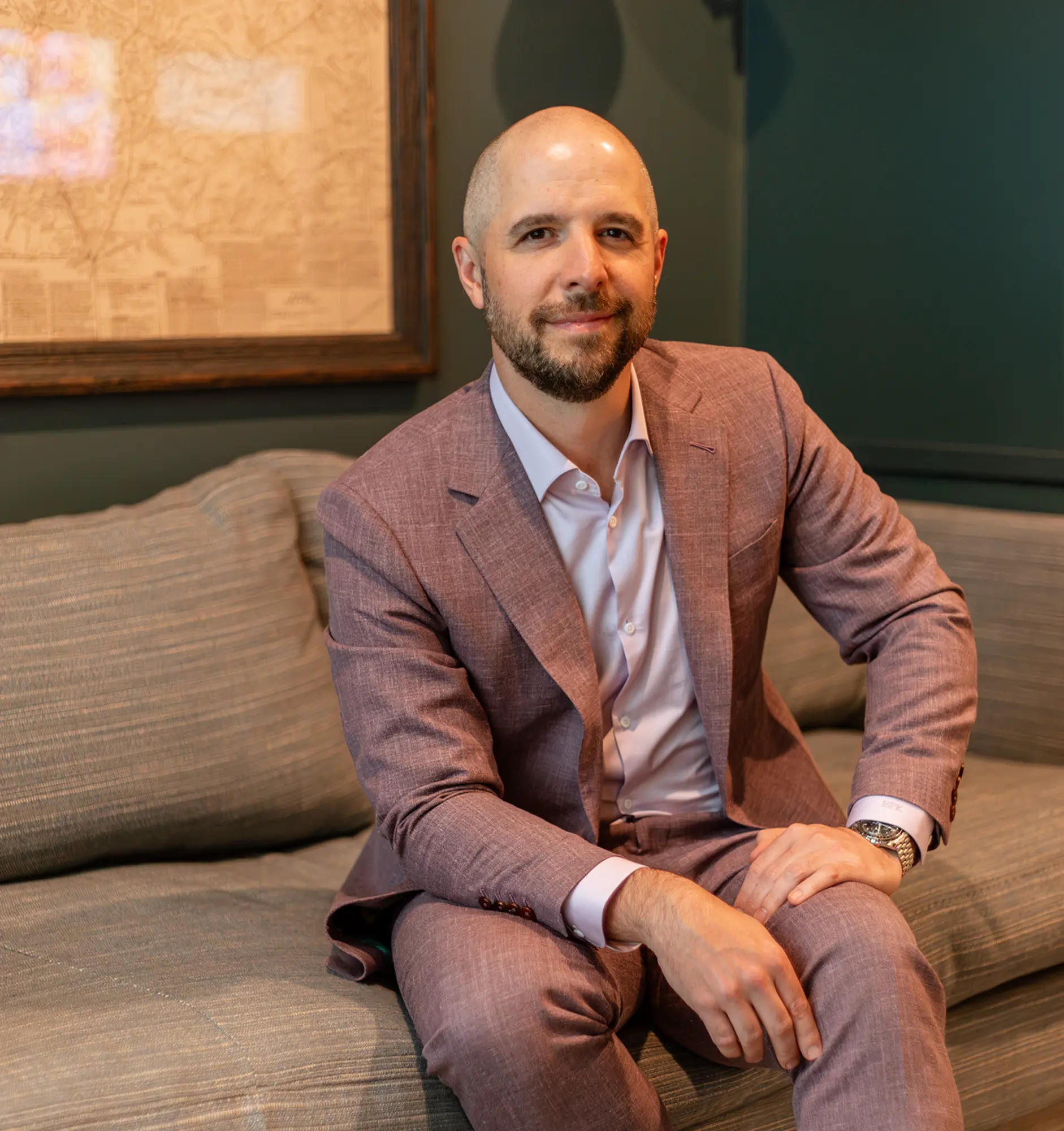
Written by Brian P. Kelley, MD — Dual Board-Certified Plastic & Hand Surgeon
Affiliate Faculty , Dell Medical School at The University of Texas at Austin
Seton Ascension Institute for Reconstructive Plastic and Hand Surgery
Medically reviewed: May 24, 2026 · Last updated: May 24, 2026
Educational content. Not a substitute for individualized medical evaluation.
Introduction
Not every patient who has a mastectomy wants reconstruction, and choosing not to reconstruct is a valid, increasingly common, and often deeply considered decision. Aesthetic flat closure (AFC) is the term for doing that choice well — intentionally contouring the chest wall to create a smooth, comfortable, flat result rather than simply closing the incision and leaving whatever contour happens to result. As a reconstructive plastic surgeon, I think it is important to discuss this option as openly and respectfully as any reconstructive technique, because for many patients it is the right choice, and because patients who choose it deserve the same attention to outcome that reconstruction patients receive.
I practice as a dual board-certified plastic and reconstructive surgeon in Austin, Texas, as an Affiliate Faculty Professor at Dell Medical School at The University of Texas at Austin, and as a partner at the Seton Ascension Institute for Reconstructive Plastic and Hand Surgery. My work in breast reconstruction spans the full range of options, and I include aesthetic flat closure among them — both as a primary choice and, as discussed below, as a procedure I am sometimes asked to perform for patients who want to reverse a reconstruction they no longer want. This post covers what aesthetic flat closure is, who performs it, what recovery and outcomes look like, what the patient-reported data show, and the specific role a plastic surgeon plays in refining or converting to a flat result.
What Aesthetic Flat Closure Is
A mastectomy removes the breast tissue. What happens to the skin and contour afterward is a separate decision. The simplest approach is a linear closure — the surgeon closes the mastectomy incision directly. But a simple linear closure often leaves redundant skin, "dog-ears" of excess tissue at the ends of the incision near the armpit, a residual contour where the inframammary fold (the crease beneath the breast) used to be, and an uneven or rippled chest wall.
Aesthetic flat closure is the intentional alternative. As described in the plastic surgery literature, it is "not just a linear closure" — it is a deliberate set of maneuvers to create a smooth, flat, aesthetically considered chest wall.1 The key technical elements include completely obliterating the old inframammary fold so there is no residual crease, ensuring the skin flaps are the same thickness on both sides, removing excess skin and de-fatting the flaps appropriately, eliminating extra skin and tissue at the lateral incision, and — a detail experienced surgeons emphasize — sitting the patient up during surgery to assess how the soft tissue re-drapes and confirm there is no excess tissue that would compromise a flat result.
The National Cancer Institute formally defines aesthetic flat closure, and using that specific term with your surgeon communicates that you want a smooth, contoured flat result, not simply a closed incision. This distinction matters, and asking for it explicitly is reasonable and appropriate. A scoping review of the aesthetic flat closure literature has worked to define the patients who choose flat closure, their motivations, the surgical techniques used, and their reported outcomes — reflecting the field's growing recognition of this option.4
Who Performs Aesthetic Flat Closure — and When a Plastic Surgeon Is Needed
An important and often misunderstood point: most aesthetic flat closures do not require a plastic surgeon. For the majority of patients, the breast surgical oncologist who performs the mastectomy can and does perform a good aesthetic flat closure as part of the same operation. A well-trained breast surgeon attentive to contour can achieve an excellent flat result, and involving a plastic surgeon is often unnecessary. I want to be clear about this because patients sometimes assume they need a plastic surgeon for flat closure, and adding a surgeon to a case that does not need one adds cost and complexity without benefit.
That said, there are specific situations where a plastic surgeon adds genuine value:
Complex or revision cases. Patients with prior chest surgery, prior radiation, very large breasts, significant body habitus considerations, or challenging chest wall anatomy may benefit from a plastic surgeon's involvement at the time of the mastectomy to optimize the flat result.
Aesthetic refinement or touch-up afterward. Even after a good flat closure, some patients have residual dog-ears, contour irregularities, redundant skin, or asymmetry that they would like refined. These touch-up procedures — revising dog-ears, fat grafting to smooth a contour depression, scar revision — are exactly the kind of refinement a plastic surgeon performs. A patient who is mostly happy with a flat closure but bothered by a specific irregularity is a good candidate for this.
Converting a reconstruction to a flat result. This is a specific and important role discussed in detail below.
The honest framing: a plastic surgeon is not a requirement for most flat closures, but is a resource for complex cases, for refinement, and for reversing a reconstruction. Knowing which situation applies to you prevents both under-treatment (a poor flat result that could have been better) and over-treatment (involving a plastic surgeon in a case that does not need one).
Converting a Reconstruction to Aesthetic Flat Closure
One of the situations where patients specifically seek out a plastic surgeon is the decision, sometimes years later, to reverse a reconstruction they no longer want — to have an implant or flap reconstruction removed and converted to an aesthetic flat closure.
This is more common than many patients realize. In one large survey of patients who went flat, 15% had initially undergone breast reconstruction that was later removed, and the reason for removal in roughly 70% of those cases was a problem with the implant.2 Implant-based reconstruction in particular can develop problems over time — capsular contracture (painful, distorting hardening of the scar tissue around the implant), loss of the original aesthetic result, implant malposition or rupture, chronic discomfort, or simply a patient's evolving sense that the reconstruction no longer serves them. Some patients with these issues do not want another implant or a flap; they want the reconstruction gone and a clean, flat, comfortable chest.
Converting reconstruction to aesthetic flat closure is a procedure I am sought out to perform. For an implant reconstruction, it involves removing the implant and, importantly, removing the capsule (the scar shell around it) when appropriate, then contouring the soft tissue into a flat closure. For an autologous reconstruction, it involves reducing or removing the flap tissue and contouring the result. In both cases, the goal is the same as a primary aesthetic flat closure: a smooth, flat, comfortable chest wall — but the technical work is often more involved because of the prior surgery, the capsule, and the altered tissue.
Patients considering this should know that it is a legitimate, recognized procedure, not an admission of failure. Reconstruction is a choice, and choosing to reverse it is also a choice. Patients whose reconstruction no longer serves them — because of complications, discomfort, or a changed relationship with their body — deserve a surgeon who will help them get to a flat result they are comfortable with rather than pressuring them toward yet another reconstruction.
The Other Direction: Flat Closure to Delayed Reconstruction
Just as a reconstruction can be converted to a flat closure, the reverse is also true: choosing aesthetic flat closure now does not permanently close the door on reconstruction later. This is one of the more common reasons patients come in for a delayed reconstruction consultation, and it is worth understanding clearly, because the fear of "missing the window" sometimes pressures patients into reconstruction they do not actually want at the time of mastectomy.
A patient who chooses flat closure and later decides she wants reconstruction — months or years afterward — can in most cases pursue delayed reconstruction. The available options depend on her anatomy and history, but they generally include autologous (flap) reconstruction using tissue from the abdomen, thigh, or elsewhere, and implant-based reconstruction, which after a flat closure typically requires tissue expansion first to recreate a skin envelope, since the flat closure intentionally removed the excess skin. Prior radiation, the quality and quantity of remaining chest wall tissue, and overall health all factor into which options are realistic.
The practical reasons patients change their minds vary. Some choose flat closure to get through cancer treatment with the simplest possible recovery, fully intending to revisit reconstruction once treatment is behind them. Some live with a flat closure for years and find their preferences shift. Some were never adequately counseled about reconstruction at the time of mastectomy and only later learn it remains available to them. All of these are legitimate paths to a delayed reconstruction consultation.
The honest framing is that delayed reconstruction after flat closure is generally more involved than reconstruction performed at the time of mastectomy, precisely because the skin envelope and the natural tissue planes have been removed or have settled. Autologous reconstruction is often the more straightforward delayed option because it brings its own new skin and tissue, whereas implant-based delayed reconstruction usually requires staged expansion first. But "more involved" is not "impossible," and for the right patient a delayed reconstruction produces an excellent result. The key point for any patient weighing her options at the time of mastectomy: choosing flat closure now preserves the option to reconstruct later, so the decision does not have to be made under the pressure of a closing window.
Surgery and Recovery
Primary aesthetic flat closure (at the time of mastectomy) does not significantly extend the mastectomy recovery, because it is performed as part of the same operation. The recovery is essentially the recovery from the mastectomy itself: a hospital stay that is often short or outpatient depending on the case, drains for one to several weeks to manage fluid, activity restrictions for a few weeks while the chest wall heals, and a return to most normal activities over several weeks.
Notably, flat closure recovery is generally shorter and simpler than reconstruction recovery. There is no donor site (as in autologous reconstruction), no expansion process or implant (as in implant reconstruction), and no microsurgery. This shorter, simpler recovery is one of the reasons patients cite for choosing flat closure.
Conversion from reconstruction to flat closure is its own operation with its own recovery, generally involving removal of the implant or flap, contouring, and drains, with a recovery period of a few weeks. It is typically more involved than a primary flat closure because of the prior surgery.
Refinement and touch-up procedures (dog-ear revision, fat grafting, scar revision) are usually smaller outpatient operations with correspondingly shorter recoveries.
The healing timeline for the chest wall itself follows the usual course: incisions heal over about two weeks, swelling and firmness resolve over weeks to a few months, and scars mature and fade over six to twelve months. Patients who undergo flat closure can use external breast prostheses (in clothing) immediately once healed if they wish, or not — that is entirely a personal choice.
Outcomes: What the Patient-Reported Data Show
The patient-reported outcomes data on aesthetic flat closure are genuinely informative and, importantly, increasingly available — though this is a population that has historically been under-studied.
A mixed-methods analysis of 252 patients who underwent post-mastectomy flat closure, using the BREAST-Q, found an overall postoperative complication rate of 17.5% — notably lower than the complication rates typically reported in implant-based and autologous reconstruction cohorts.3 On the BREAST-Q, these patients reported high satisfaction with their surgeons and high physical well-being, with more moderate satisfaction in the breast-specific domains. The lower complication rate is consistent with the simpler nature of the procedure and is one of its genuine advantages.
A large online survey of patients who chose to go flat found that most were satisfied with their decision.2 The single strongest predictor of dissatisfaction was not the surgical result itself but the experience of "flat denial" — a lack of support from the surgeon for the patient's decision to go flat, or a surgeon who left extra skin (against the patient's wishes) in case the patient "changed her mind" about reconstruction. This finding is important and worth stating plainly: the data suggest that the quality of the shared decision-making and the surgeon's respect for the patient's choice matter as much as the technical outcome. Patients who felt supported and who received a genuine aesthetic flat closure were largely satisfied; patients who felt pressured or who received a poor closure were not.
The breast-specific and sexual well-being domains of the BREAST-Q tend to score lower in flat closure patients, but the interpretation requires care: the BREAST-Q was originally designed for reconstruction patients and may not fully capture what a flat closure patient values, since some patients who choose flat closure are explicitly prioritizing things other than a breast contour. The research community is actively working on better-suited outcome measures for this population.
Risks
Aesthetic flat closure carries the risks of any mastectomy-related procedure, generally at lower rates than reconstruction because the procedure is simpler. Recognized risks include bleeding, infection, hematoma, seroma (fluid collection), delayed wound healing, and the cosmetic risks specific to contour — residual dog-ears, contour irregularities, redundant skin, asymmetry, or a result that is flatter or less flat than the patient hoped. Some of these cosmetic issues are correctable with the refinement procedures discussed above.
Conversion from reconstruction to flat closure adds the risks associated with removing the prior reconstruction — bleeding and seroma related to capsule removal, and the contour challenges of working in previously operated, sometimes irradiated, tissue.
As with any mastectomy, there will be reduced or absent sensation in the chest skin, and there will be scars. These are inherent to mastectomy rather than specific to flat closure.
A Note on Respect for the Decision
The strongest message from the patient-reported outcomes literature is not technical — it is that patients who choose to go flat deserve to have that choice respected and executed well. The data show that lack of surgeon support is the dominant driver of dissatisfaction. Choosing not to reconstruct is not a lesser decision or a default; for many patients it is a positive, affirmative choice that fits their life, their values, and their relationship with their body. My role, whether I am performing the flat closure, refining it, or converting a reconstruction to it, is to help the patient achieve the result she actually wants.
Related Topics
Frequently Asked Questions
Usually not. For most patients, the breast surgeon who performs the mastectomy can perform a good aesthetic flat closure as part of the same operation. A plastic surgeon adds value in complex or revision cases, for aesthetic refinement or touch-up afterward, and for converting an existing reconstruction to a flat result. Adding a plastic surgeon to a straightforward case that does not need one adds cost without benefit.
A simple linear closure just closes the mastectomy incision and may leave excess skin, dog-ears, or an uneven contour. An aesthetic flat closure is an intentional set of techniques to create a smooth, flat, contoured chest wall — obliterating the old breast fold, removing excess skin and fat, eliminating dog-ears, and ensuring symmetry. Using the specific term "aesthetic flat closure" with your surgeon communicates that you want the contoured result, not just a closed incision. However, most breast oncology surgeons provide this routinely for most patients.
Yes. Converting an existing reconstruction to an aesthetic flat closure is a recognized procedure, and it is something plastic surgeons are specifically sought out to perform. It is most common with implant reconstruction when problems such as capsular contracture, loss of the aesthetic result, or chronic discomfort develop. The implant (and usually the capsule) is removed and the chest is contoured into a flat closure. This can be done years after the original reconstruction.
Generally yes. Flat closure has no donor site, no implant or expansion process, and no microsurgery, so the recovery is typically shorter and simpler than reconstruction. The published complication rate for flat closure (around 17.5% in one large series) is lower than the rates typically reported for implant-based and autologous reconstruction.
The data show that most patients who choose to go flat are satisfied with their decision. Importantly, the strongest predictor of dissatisfaction is not the surgical result itself but a lack of support from the surgeon for the decision to go flat — sometimes called "flat denial." Patients who feel supported in their choice and who receive a genuine aesthetic flat closure (rather than a poor linear closure) report high satisfaction.
Yes. After a flat closure, you can use external breast prostheses in clothing if you wish, or not — it is entirely your choice. Delayed reconstruction is also generally possible later if you change your mind, and this is actually a common reason patients come in for a delayed reconstruction consultation. Autologous (flap) reconstruction is often the more straightforward delayed option because it brings new skin and tissue, while delayed implant reconstruction usually requires tissue expansion first to recreate a skin envelope. Choosing flat closure now does not permanently foreclose reconstruction in the future.
Generally, yes — delayed reconstruction after flat closure is more involved than reconstruction performed at the time of mastectomy, because the skin envelope and natural tissue planes have been removed or have settled. Autologous reconstruction is often the more straightforward delayed option since it brings its own new skin. Implant-based delayed reconstruction usually requires staged tissue expansion first. "More involved" is not "impossible," though, and for the right patient a delayed reconstruction after flat closure produces an excellent result. The important point is that choosing flat closure does not have to be made under the pressure of a closing window.
"Flat denial" refers to a surgeon not supporting a patient's clear decision to go flat — for example, leaving extra skin against the patient's wishes in case she "changes her mind" about reconstruction, or discouraging the choice. The patient-reported outcomes literature identifies this as the strongest predictor of dissatisfaction among patients who go flat, which is why respecting and properly executing the patient's choice is so important.
1. Morrison KA, Karp NS. Not Just a Linear Closure: Aesthetic Flat Closure after Mastectomy. Plastic and Reconstructive Surgery — Global Open. 2022;10(5):e4327. PMID: 35620492.
2. Baker JL, Dizon DS, Wenziger CM, Streja E, Thompson CK, Lee MK, DiNome ML, Attai DJ. "Going Flat" After Mastectomy: Patient-Reported Outcomes by Online Survey. Annals of Surgical Oncology. 2021;28(5):2493–2505. DOI: 10.1245/s10434-020-09448-9.
3. Soroudi D, Parmeshwar N, Gozali A, Piper M. Post-Mastectomy Flat Closure: A Mixed-Methods Analysis of Patient Outcomes and Perspectives. Annals of Surgical Oncology. 2025. PMID: 40249518.
4. Evaluation of aesthetic flat closure: a scoping review. Journal of Plastic, Reconstructive & Aesthetic Surgery / open-access scoping review. PMCID: PMC12596527.
5. Pusic AL, Klassen AF, Scott AM, Klok JA, Cordeiro PG, Cano SJ. Development of a new patient-reported outcome measure for breast surgery: the BREAST-Q. Plastic and Reconstructive Surgery. 2009;124(2):345–353. PMID: 19644246.
6. Susan G. Komen www.komen.org — Patient experience story: https://www.komen.org/blog/ellyns-story-flat-please-hold-the-shame/.
7. Breastcancer.org — Going Flat (No Reconstruction) and Aesthetic Flat Closure: https://www.breastcancer.org/treatment/surgery/going-flat-no-reconstruction/aesthetic-flat-closure.
8. Not Putting on a Shirt — flat closure advocacy and patient resources: https://notputtingonashirt.org/.
Closing Disclaimer
This article is educational and does not establish a doctor-patient relationship. It does not replace individualized consultation, examination, or review of personal medical history. Patients considering aesthetic flat closure, refinement of a flat result, or conversion of a reconstruction to a flat closure are encouraged to discuss their specific situation and goals with their surgical team.



Want to learn more?
Book a consultation