Hot Topics and News

2.6.2026
Breast Reconstruction Coverage in Texas: WHCRA, Medicaid, and Local Resources
Breast reconstruction is protected by federal law, but real coverage gaps remain. Dr. Brian Kelley, an Austin reconstructive microsurgeon, walks through WHCRA, Texas Medicaid (MBCC), Travis County MAP, and the Seton charity care he participates in for patients without standard coverage. The post also covers the Breast Cancer Resource Center, the coverage gray zone for sensate reconstruction and prophylactic lymphedema surgery, and how to appeal when these procedures are denied.

1.6.2026
Painful Neuroma After Prior Surgery: Causes, Treatment, and When to See a Specialist
A painful neuroma after surgery is a focal, treatable cause of chronic post-surgical pain that is often missed. Dr. Brian Kelley, an Austin nerve surgeon, walks through where neuromas form after specific operations — mastectomy and cancer resection, hernia repair, knee and joint surgery, and facial surgery — and what modern treatment looks like, including traditional excision and modern techniques like TMR and RPNI. PRO data and specialist evaluation criteria included.

31.5.2026
Not a DIEP Candidate? Alternative Flaps for Breast Reconstruction
The DIEP flap is the most common autologous breast reconstruction, but not every patient is a candidate — some are too thin, have had prior abdominal surgery, or prefer a different donor site. Dr. Brian Kelley, a microsurgeon in Austin, walks through the alternatives: PAP, TUG, SGAP and other free flaps; the latissimus dorsi flap; and his work offering autologous reconstruction to charity-care and Travis County MAPs patients who otherwise wouldn't have access.

29.5.2026
Breast Implants for Reconstruction: Where Motiva Fits
A board-certified Austin plastic surgeon on what Motiva and other breast implants actually mean for reconstruction — and why augmentation data doesn't necessarily transfer to a post-mastectomy breast.

26.5.2026
Sex and Intimacy After Breast Reconstruction: An Honest Conversation
Sex and intimacy after breast reconstruction is one of the most important parts of recovery and the least honestly discussed. Up to 85% of breast cancer patients report sexual health concerns, yet few receive guidance. Dr. Brian Kelley explains what actually changes — sensation loss, body image, the effects of cancer treatment — what surgery can and cannot restore, what the patient-reported outcomes data show, and where to find real help. An honest, evidence-based conversation.

25.5.2026
Targeted Muscle Reinnervation (TMR) for Amputees: A Patient's Guide
For many amputees, the hardest part of life after amputation is the pain. Targeted muscle reinnervation (TMR) is a surgery that reroutes cut nerves to nearby muscles, giving them a target and preventing the painful neuromas behind phantom limb and residual limb pain. Dr. Brian Kelley, trained in nerve surgery at the University of Michigan, explains how TMR works, what recovery involves, and what the patient-reported outcomes data show — including durable pain relief and reduced opioid use.

24.5.2026
Aesthetic Flat Closure: Techniques, Outcomes, and the Decision Not to Reconstruct
Not every patient who has a mastectomy wants reconstruction, and choosing to go flat is a valid, increasingly common decision. Aesthetic flat closure is doing that choice well — intentionally contouring the chest for a smooth, flat result. Dr. Brian Kelley explains the techniques, recovery, and outcomes, why most patients don't need a plastic surgeon for it, and the role a plastic surgeon plays in refinement, in converting a reconstruction to flat, and in delayed reconstruction later.
22.5.2026
TMR vs. RPNI: What Is the Difference?
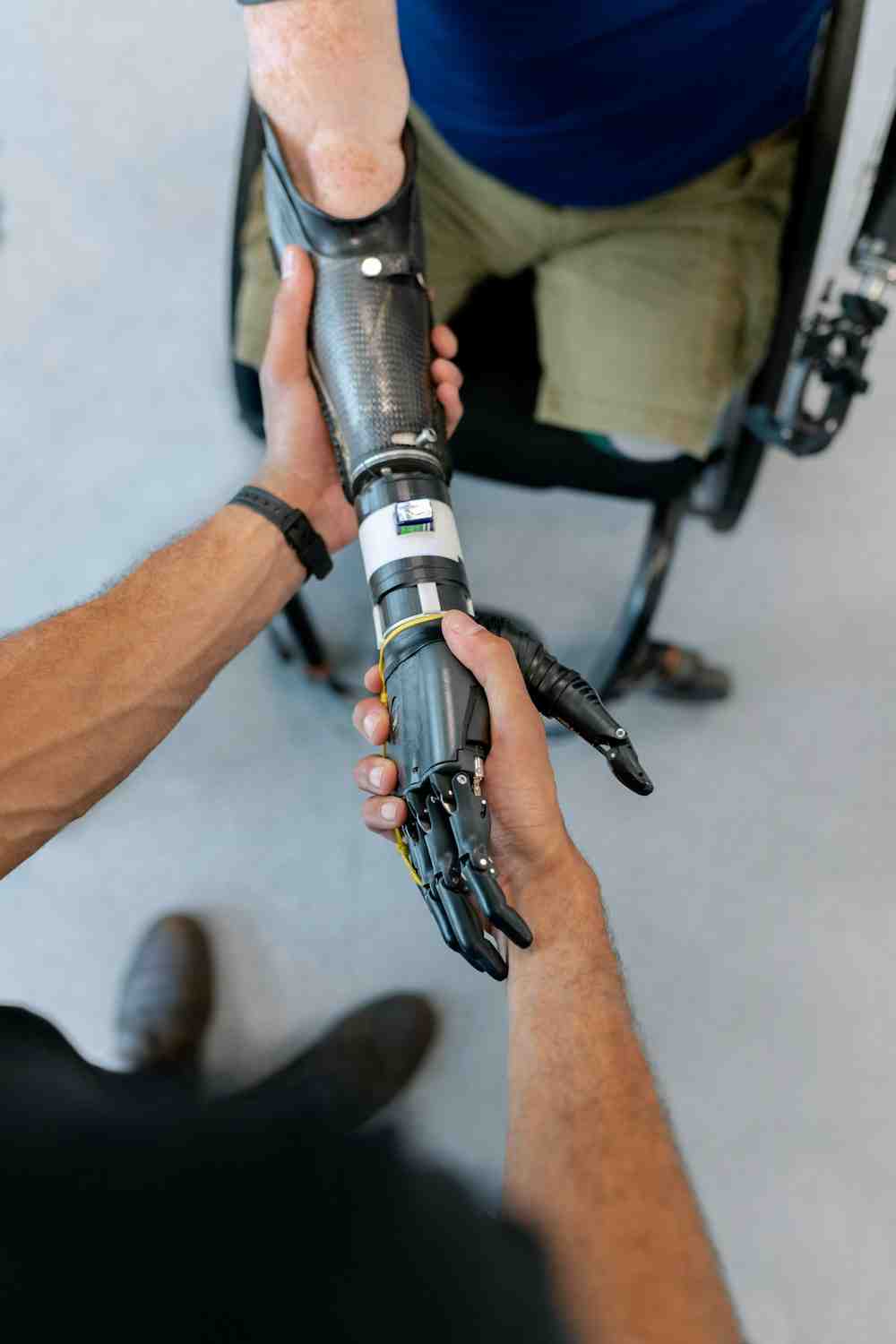
Targeted muscle reinnervation (TMR) and regenerative peripheral nerve interface (RPNI) both give a divided nerve a new target after amputation, preventing painful neuromas and enabling prosthetic control. TMR reroutes the nerve into an existing muscle; RPNI wraps it in a small free muscle graft. Dr. Brian Kelley, trained at the University of Michigan where RPNI was pioneered, explains how the two differ, when each is used, and what the published outcomes show.

10.5.2026
What to Expect After RPNI Surgery for Nerve Pain
Regenerative Peripheral Nerve Interfaces (RPNIs) for established nerve pain work by giving divided nerves a new target, but relief develops over months, not weeks. The incision heals quickly; the nerve reorganizes slowly. Dr. Brian Kelley, trained at the University of Michigan where RPNI was pioneered, explains the recovery timeline, how nerve perception changes month by month, what imaging shows during healing, and the realistic outcomes and risks based on real evidence.

10.5.2026
Breast Sensation After Mastectomy: What to Expect, What Surgery Can and Cannot Do
Breast sensation after mastectomy is typically reduced or absent, and a subset of patients develop chronic post-mastectomy pain. Nerve grafting, allograft, and innervated flap techniques can improve sensation in some patients, but normal pre-mastectomy sensation is essentially never restored. Dr Brian Kelley helps to summarize and explain the latest science.

8.5.2026
Lymphovenous Bypass for Breast Cancer Lymphedema: Evidence, Outcomes, and Coverage
Lymphedema is a dreaded long-term affect of lymph node dissection in cancer surgery, such as breast cancer. Modern surgical techniques may help to prevent or alleviate those symptoms but surgeons aren't sure what the full utility of these treatments may be. We explore the background and offer our thoughts on when these surgeries might be right for patients.
Want to learn more?
Book a consultation